Photo: Nathan T. Jones
Feravox · The Voice of the Wild
New Jersey Chorus Frog
Pseudacris kalmi
Least Concern
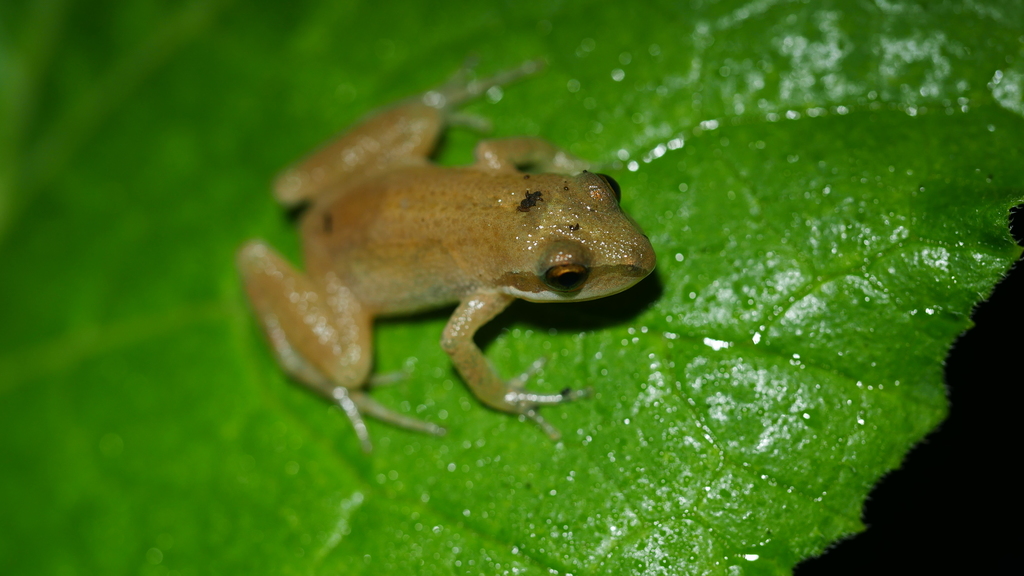
New Jersey Chorus Frog (Pseudacris kalmi) lives in shallow vernal pools across New Jersey area. It feeds on diet not described. Its conservation status is Least Concern.
The New Jersey chorus frog (Pseudacris kalmi) is a diminutive member of the Hylidae, measuring just 19–36 mm from snout to vent. Its skin shifts through shades of grey, tan, or greenish-brown, marked by a dark lateral stripe that runs from the snout, across the eyes, to the groin, and three bold dorsal stripes that may break in the middle. In early spring, from February to April, males gather at shallow vernal pools, perched on water or emergent vegetation, and emit a distinctive chorus that draws females to the water’s edge. The females lay clutches of 8 to 143 eggs, adhering them to plant stems where they develop in the fleeting pool before the water recedes. After roughly two months, the tadpoles metamorphose into tiny frogs, ready to resume the cycle. Though small, this amphibian navigates a perilous world of predators, water snakes, foxes, birds, raccoons, crayfish, and spiders, yet its rapid development and flexible coloration provide a surprising resilience in the transient habitats it calls home, a trait that keeps it hopping along the edges of New Jersey’s wetlands…
Real recorded sounds, 11 nature games and a free Daily 5, 1v1 quiz duels, conservation wins and a safe Kids mode. Free on Feravox.