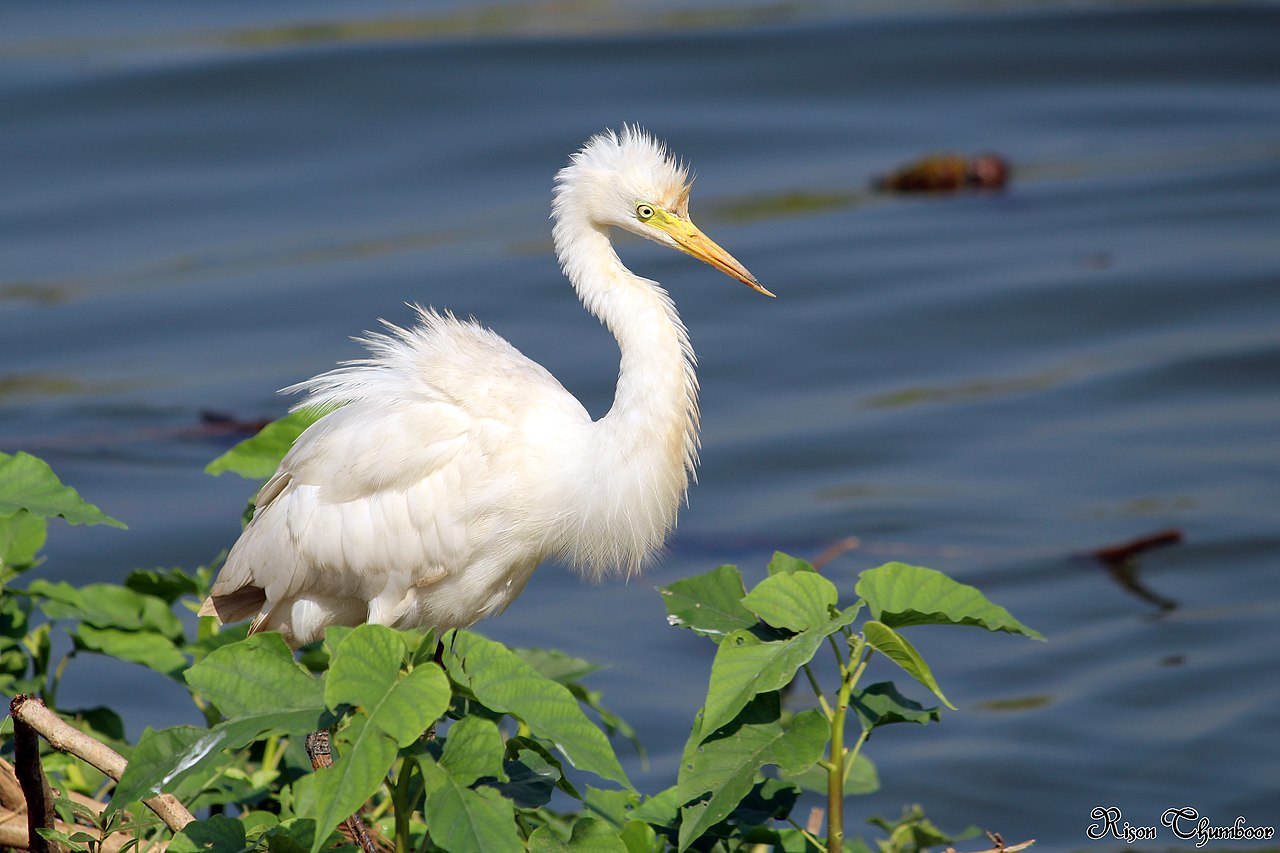
Medium Egret (Ardea intermedia) lives in freshwater wetlands across Sub-Saharan Africa, Southeast Asia. It feeds on fish and frogs. Its conservation status is Least Concern.
Fascinating facts about the Medium Egret
- The medium egret measures just 56-72 cm in length with a 105-115 cm wingspan and weighs around 400 g, giving it a sleek, medium-sized heron silhouette. It moves through shallow coastal or fresh water, including flooded fields, stalking fish, frogs, crustaceans and insects with deliberate steps. When the breeding season arrives it joins other herons to build platform nests of sticks in trees or shrubs, often forming mixed colonies.
- During the breeding season the medium egret's bill turns black, a clear marker that sets the intermedia subspecies apart from its yellow-billed relatives. The other recognised forms show different bill colours: A. plumifera displays a yellow-and-pink bill and A. brachyrhyncha has a much yellower face and lores. In addition, the intermediate egret sports black colouring on the top of its legs, whereas the yellow-billed egret has reddish leg tops.
- A medium egret typically lays a clutch of two or three pale-green eggs, though unusually large clutches can contain up to six eggs with slightly pitted shells. Both parents share incubation duties, keeping the eggs warm for 24 to 27 days until they hatch, often at different times within the same brood. After hatching the chicks are brooded for about 12 days before they begin leaving the nest, and they fledge around 40 days of age.
- When a bird of prey flies overhead, the defending adult will crouch low over the nest, lift its loose plumes and thrust its bill toward the intruder. Both the male and female share incubation duties, so either can intervene if danger appears. This joint vigilance continues through the 24-27 day incubation period and again while the chicks are brooded for about twelve days, giving the pair constant protection of their vulnerable young.
- Medium egrets tend to breed in mixed colonies of herons, building stick platforms in trees or shrubs and laying typically two or three pale-green eggs, though clutches can reach six. Their breeding success rises markedly in years with abundant water, as the species thrives when wetlands are plentiful, whereas dry years see lower reproductive output.
Sources
Every fact above was checked against these pages, and kept only where one of them states it.
At a glance
RangeSub-Saharan Africa, Southeast Asia
HabitatFreshwater wetlands
DietFish and frogs
About the Medium Egret
As the sun rises over the marshy wetlands, a vision of elegance emerges from the mist, the Medium Egret unfolding its slender form like a ghostly apparition, its snowy plumage glistening with dew. With deliberate, almost languid strides, it moves through the shallow waters, its long legs slicing through the reeds with barely a ripple, as it searches for the unsuspecting fish and frogs that will become its breakfast. In this serene and peaceful world, the Medium Egret reigns supreme, a master of stealth and patience, its very presence a reminder of the beauty and tranquility that can be found in the unlikeliest of places.
Hear the Medium Egret, and 4,400+ more
Real recorded sounds, 11 nature games and a free Daily 5, 1v1 quiz duels, conservation wins and a safe Kids mode. Free on Feravox.