Photo: D. Rafael S. Fernandes
Feravox · The Voice of the Wild
Longspined Bullhead
Taurulus bubalis
Least Concern
Longspined Bullhead (Taurulus bubalis) lives in coastal marine waters across European coasts. It feeds on prawns, molluscs, small fish. Its conservation status is Least Concern.
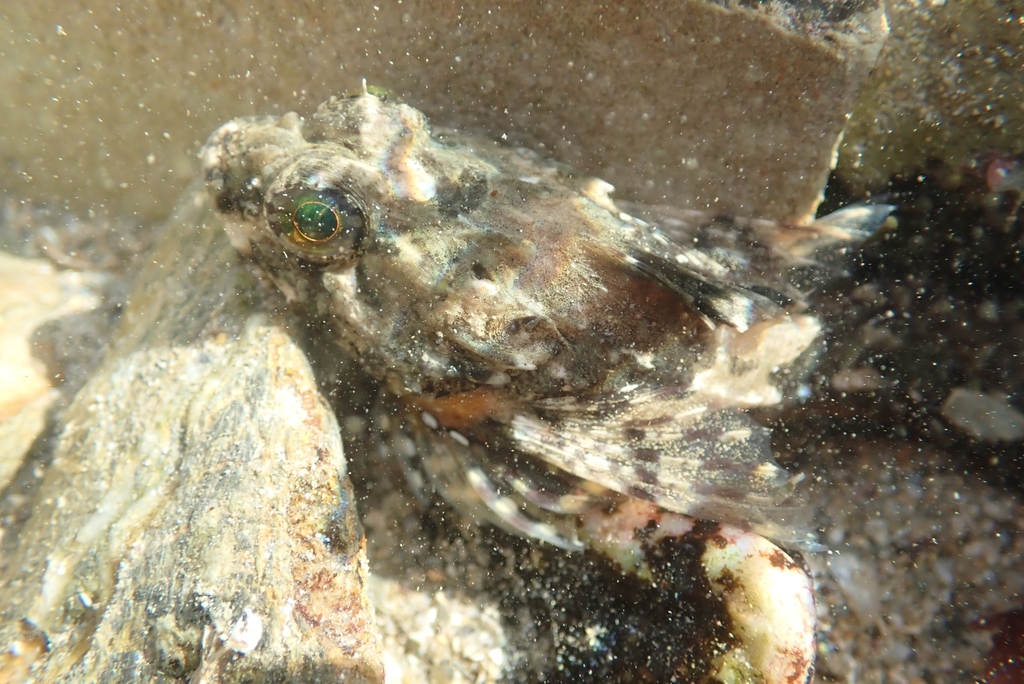
The long-spined bullhead (Taurulus bubalis) is a compact, thick-bodied sculpin that clings to the rocky littoral zones of Europe’s coasts. Its head dominates the silhouette, crowned with backward-sloping bony tubercles, while the flank bears a row of bony nodules along the lateral line. Colouration shifts from muted brown or olive green to a mottled pattern of cream blotches intersected by four dark vertical bands; the belly is a pale bluish-green, turning a vivid red in breeding males. Lacking scales and a swim bladder, the fish rests on the substrate, its dense body sinking the moment it pauses, a trait shared across the Cottidae family. An ambush predator, the bullhead stalks prawns, molluscs and diminutive fish such as gobies and blennies, striking from camouflage among rocks and seaweed. Its two gill-cover spines, front one extending farther than the rear, add a defensive edge. Reproduction unfolds in early spring: internal fertilisation yields eggs deposited in algae, which adults vigilantly guard. After hatching, the fry drift offshore before returning to coastal habitats, a life-cycle that remains only partially documented. This small yet aggressive sculpin, capable of confronting larger fish, exemplifies the hidden ferocity of the intertidal world, a reminder that even the most unassuming creatures can wield surprising strength and intricate behaviours
Real recorded sounds, 11 nature games and a free Daily 5, 1v1 quiz duels, conservation wins and a safe Kids mode. Free on Feravox.