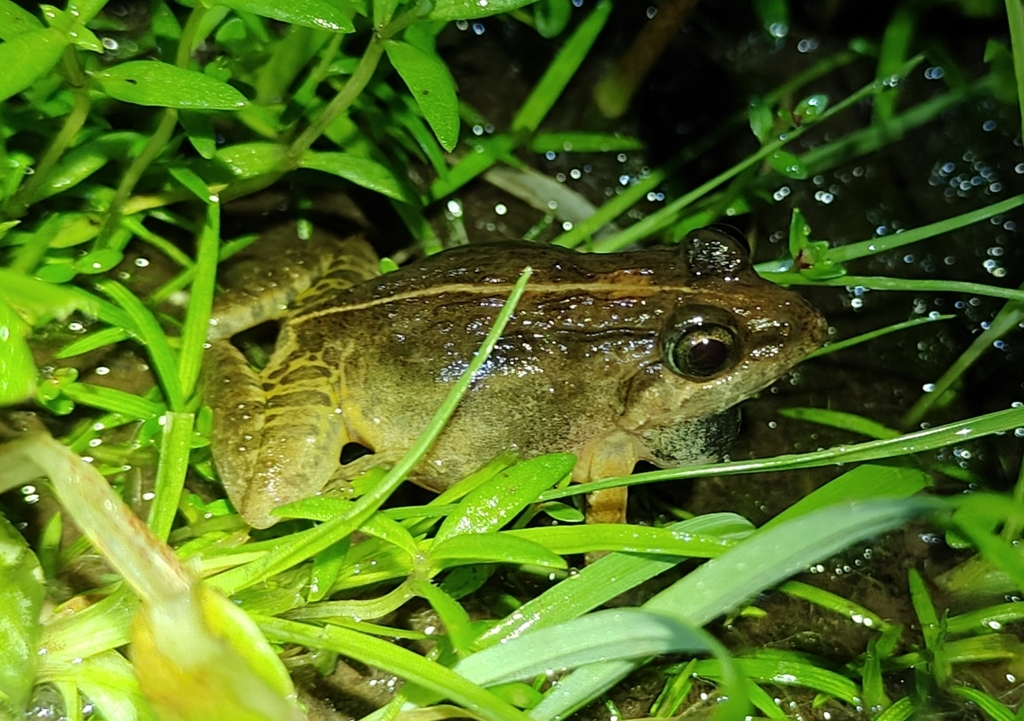
Photo: Rohit Naniwadekar
Feravox · The Voice of the Wild
Long-legged Cricket Frog
Minervarya syhadrensis
Least Concern
Long-legged Cricket Frog (Minervarya syhadrensis) lives in shallow water pools across South Asia. It feeds on not documented. Its conservation status is Least Concern.
The long-legged cricket frog, Minervarya syhadrensis, is a diminutive amphibian that belies its modest size with striking adaptations. Females measure 20.7–22.8 mm from snout to vent, while males are slightly smaller at 17.5–19.1 mm, giving the species a delicate, almost jewel-like appearance. Its name reflects the slender limbs that propel it across the grassy margins of temporary pools, where it blends into the mosaic of wetland vegetation across central northern India, western Peninsular India, Bangladesh, and southern Nepal, typically below 2,000 m (6,600 ft). In the monsoon-laden months, these frogs become nocturnal heralds of the rains, gathering in shallow water bodies under partially submerged grass or paddy fields, each male perched 0.5–1 m apart, their single subgular vocal sac inflating with each call. When the first heavy pre-monsoon showers arrive in April, the males launch a chorus that persists through September, their calls echoing in antiphonal duets between nearest neighbors. Each call consists of 7 to 28 pulse groups, a rhythmic pattern that not only attracts mates but also creates a structured acoustic landscape across the wetlands. This precise spacing and timing of calls, maintaining a half-to-one-meter buffer while answering the nearest rival, offers a surprising glimpse into the frog’s sophisticated communication system, a subtle dance of sound that orchestrates breeding in the fleeting pools of the Indian subcontinent.
Real recorded sounds, 11 nature games and a free Daily 5, 1v1 quiz duels, conservation wins and a safe Kids mode. Free on Feravox.