Photo: Sockrosma
Feravox · The Voice of the Wild
Estuary Stingray
Hemitrygon fluviorum
Vulnerable
Estuary Stingray (Hemitrygon fluviorum) lives in mangrove-lined tidal rivers across eastern Australia. It feeds on crustaceans and polychaete worms. Its conservation status is Vulnerable.
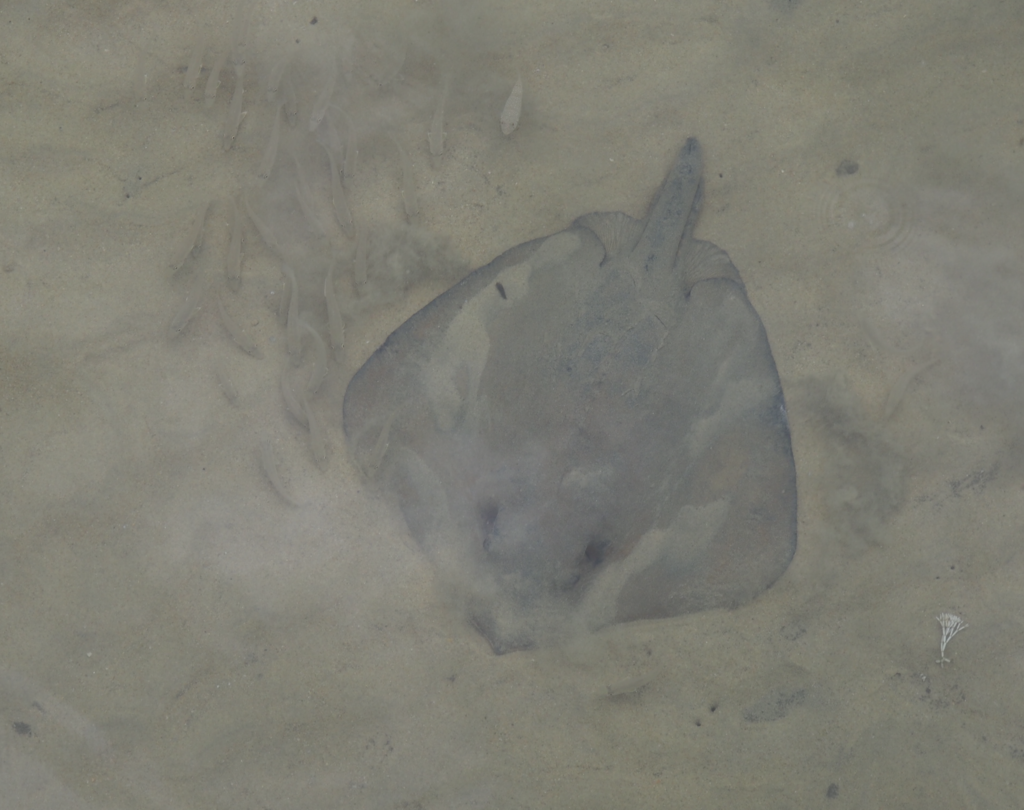
The estuary stingray (Hemitrygon fluviorum) glides through the mangrove-lined tidal rivers and shallow bays of southern Queensland and New South Wales, its diamond-shaped disc a muted canvas of yellow-brown to olive that fades toward the edges and deepens over the sting. At up to 93 cm (37 in) across, and possibly 1.2 m (3.9 ft) wide, the ray’s broad pectoral wings sweep over sandy-mud bottoms while a whip-like tail, twice the disc length, bears one or two serrated stingers and a low ventral fin fold. A row of enlarged thorns runs along the midline of its back, and long, narrow nostrils framed by a short, fringed skin “skirt” give it a distinctive profile. By day it lies partially buried, but at high tide it ventures onto intertidal flats, hunting chiefly crustaceans such as the soldier crab (Mictyris longicarpus) and polychaete worms, only occasionally raiding oyster beds, a reputation that belies its true diet. A surprising trait is its aplacental viviparity: embryos first draw on yolk, then switch to maternal “uterine milk,” a histotroph that sustains them until birth, producing litters each year in sheltered nursery waters of rivers like the Nerang and Macleay.
Real recorded sounds, 11 nature games and a free Daily 5, 1v1 quiz duels, conservation wins and a safe Kids mode. Free on Feravox.