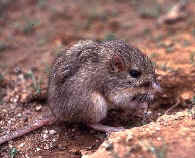
Desert Pocket Mouse (Chaetodipus penicillatus) lives in desert scrub across Southwest North America. It feeds on seeds and insects. Its conservation status is Least Concern.
Fascinating facts about the Desert Pocket Mouse
- Desert pocket mice can bite through hard-crusted desert soil, physically chewing the solid layer to create a burrow. Their tunnels are usually excavated in silty, sandy or gravelly soil, which they prefer for easier digging. Once completed, the burrows serve as refuges, storage sites for cached seeds and safe chambers for caring for newborns. This ability lets them survive in the sparse, open desert habitats they inhabit.
- The average lifespan of C. penicillatus is around one year, so most individuals die before reaching a second birthday. In some parts of its range the mouse may remain active throughout the year, although it becomes inactive during the winter in southern Arizona. It is mainly nocturnal, spending daylight hours hidden in its burrows. This short life span forces the species to breed quickly and repeatedly during the brief favourable seasons.
- Population turnover can reach as high as 95%, meaning almost the entire community is replaced each year. The average lifespan of C. penicillatus is around one year, so individuals have only a brief window to reproduce. Breeding occurs in spring, with females capable of producing one or more litters of two to five young during spring and summer.
- Female desert pocket mice carry their embryos for just 23 days before giving birth, and each litter contains between two and five pups. During the spring and summer a single female can produce one or more such litters, allowing rapid population growth in the short favourable season. Remarkably, many of the young reach sexual maturity while still in their juvenile pelage and may become pregnant before their first set of adult teeth appear.
- Desert pocket mice are aggressively solitary, each defending a personal home range that never exceeds one acre. They are primarily nocturnal, and in some parts of their range remain active year-round, though populations in southern Arizona become inactive during the winter months.
Sources
Every fact above was checked against these pages, and kept only where one of them states it.
At a glance
RangeSouthwest North America
HabitatDesert scrub
DietSeeds and insects
About the Desert Pocket Mouse
In the arid expanse of the desert, a tiny, unassuming hero emerges under the cover of darkness, as the desert pocket mouse embarks on its nocturnal forays, its oversized hind legs propelling it with remarkable agility across the sand. With an endearing blend of caution and curiosity, it navigates this harsh yet beautiful landscape, its large eyes shining like beacons as it searches for seeds and fruits to store in its cheek pouches. As it darts and weaves through the underbrush, its soft, velvety fur a testament to its remarkable adaptability, the desert pocket mouse reveals itself to be a true marvel of evolutionary resilience.
Hear the Desert Pocket Mouse, and 4,400+ more
Real recorded sounds, 11 nature games and a free Daily 5, 1v1 quiz duels, conservation wins and a safe Kids mode. Free on Feravox.