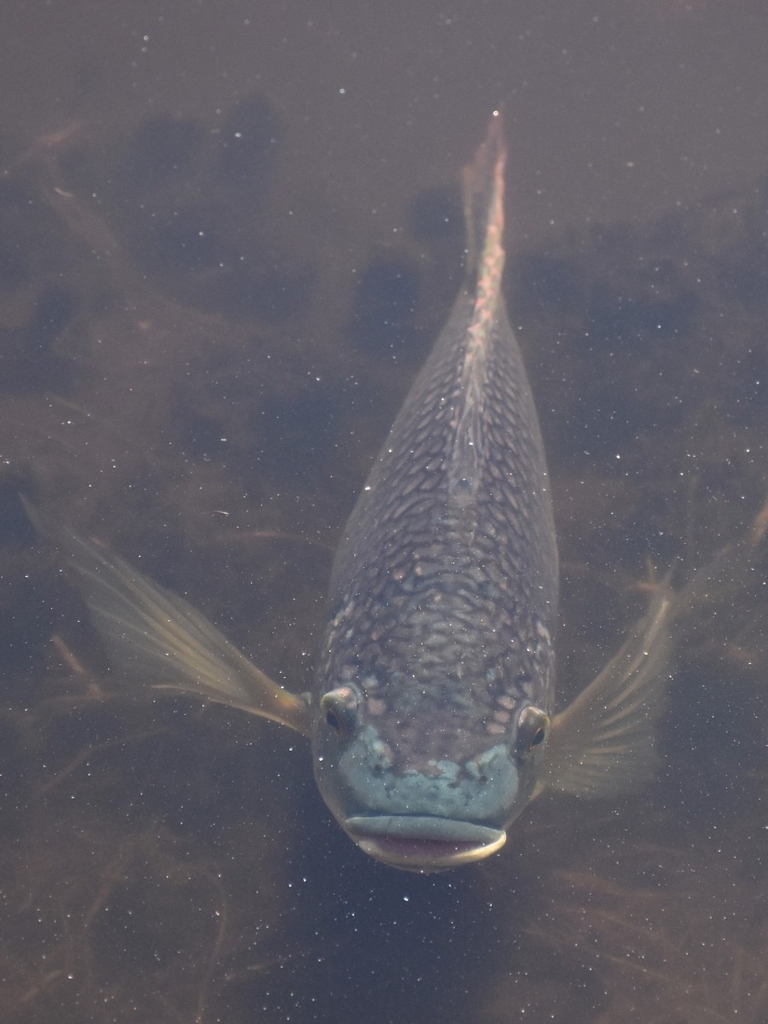
Photo: Zac Peterson
Feravox · The Voice of the Wild
Blue Tilapia
Oreochromis aureus
Not Evaluated
Blue Tilapia (Oreochromis aureus) lives in fresh and brackish water across Northern Africa, Middle East. It feeds on primarily herbivorous, occasional zooplankton.
The blue tilapia (Oreochromis aureus) glides through fresh and brackish waters with a sleek, laterally-compressed body that reaches up to 53 cm (21 in) and can weigh more than 4.5 kg (10 lb). Its coloration is a striking blue-gray, and it is a mouthbrooder, with females protecting broods of 160 to 1 600 eggs tucked beneath their throats until the fry emerge. Though primarily herbivorous, these cichlids opportunistically filter zooplankton and, when young, supplement their diet with tiny invertebrates, a flexibility that fuels their success across a temperature span of 8 °C to 40 °C (46 °F–104 °F) and salinities up to 4.5 %. Native to the Senegal, Niger, Benue and lower Nile rivers of northern and western Africa and the Jordan River of the Middle East, they have been introduced worldwide, thriving in streams, rivers, lakes, ponds and even hypersaline habitats. A surprising trait is their tolerance for salt water well beyond typical freshwater cichlids, allowing them to colonise coastal lagoons and brackish estuaries where few relatives survive. In the United States, they now dominate habitats from Texas to Florida, reaching as far north as Lake Alice near Gainesville, where they have reshaped fish communities and outcompete native species. Their adaptability and prolific breeding make them a textbook example of how a modest-sized fish can become an ecological powerhouse, reshaping ecosystems wherever they settle
Real recorded sounds, 11 nature games and a free Daily 5, 1v1 quiz duels, conservation wins and a safe Kids mode. Free on Feravox.