Photo: Rongrong Angkaew
Feravox · The Voice of the Wild
Black Marsh Turtle
Siebenrockiella crassicollis
Endangered
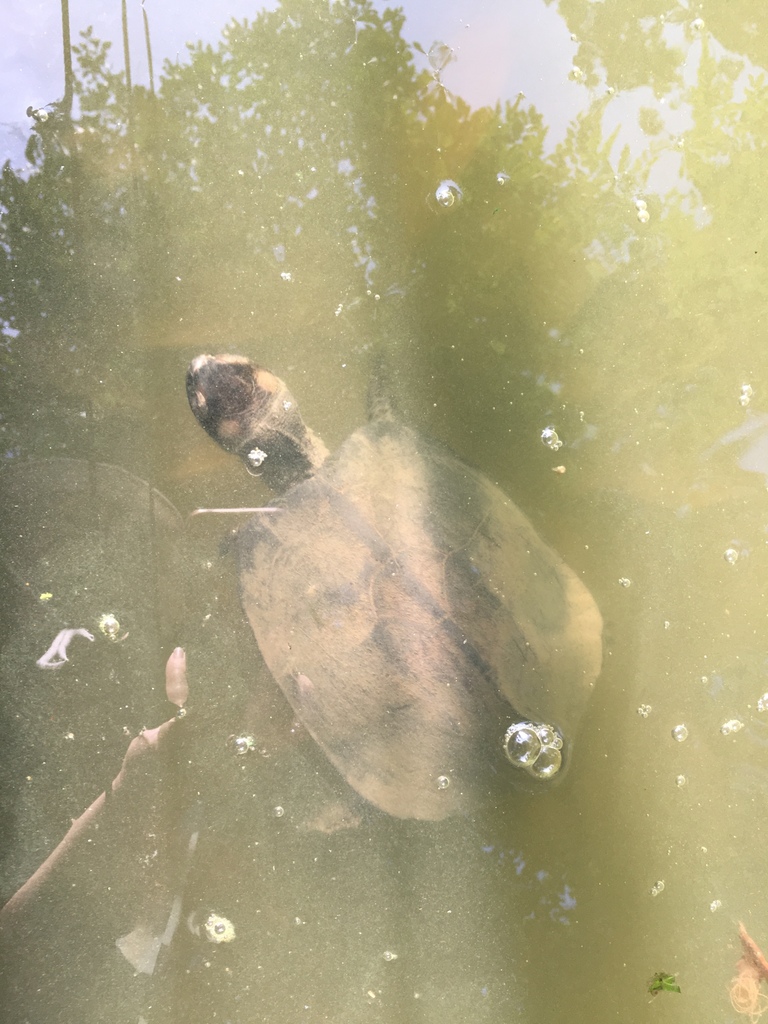
Black Marsh Turtle (Siebenrockiella crassicollis) lives in marshes, swamps, ponds across Southeast Asia. It feeds on carnivorous aquatic invertebrates and fish. Its conservation status is Endangered.
The black marsh turtle, Siebenrockiella crassicollis, is a sleek, almost entirely black freshwater turtle that measures roughly 17 cm in carapace length, though some individuals can double that size. Its ovoid shell bears a pronounced central ridge and often two lateral keels, while the plastron remains unhinged with a shallow U-shaped notch. Thick, dark-gray necks fold into the shell, forming a distinctive collar, and the head sports a short, upward-pointed snout framed by cream-to-yellow markings around the eyes and throat, giving rise to its endearing nickname, the “smiling terrapin.” Favoring slow-moving or stagnant, vegetation-rich waters such as marshes, swamps, and ponds across southern Vietnam, Cambodia, southern Myanmar, Thailand, Malaysia, Singapore, and parts of Indonesia, these turtles spend much of their time buried in soft mud, emerging mainly at night to hunt. Their diet is predominantly carnivorous, capturing insects, worms, molluscs, amphibians, crustaceans, and small fish, though opportunistic scavenging of plant matter and carrion also occurs, especially in adults. A surprising trait for a reptile is its genetic sex-determination system: black marsh turtles possess an XX/XY chromosomal mechanism on macrochromosomes, a rarity among turtles whose sex is usually temperature-dependent. Their nocturnal, shy nature is complemented by a defensive cloacal secretion and powerful, upward-curving jaws that can deliver a firm bite when mishandled.
Real recorded sounds, 11 nature games and a free Daily 5, 1v1 quiz duels, conservation wins and a safe Kids mode. Free on Feravox.