Photo: Dane Paijmans]
Feravox · The Voice of the Wild
African Oystercatcher
Haematopus moquini
NT
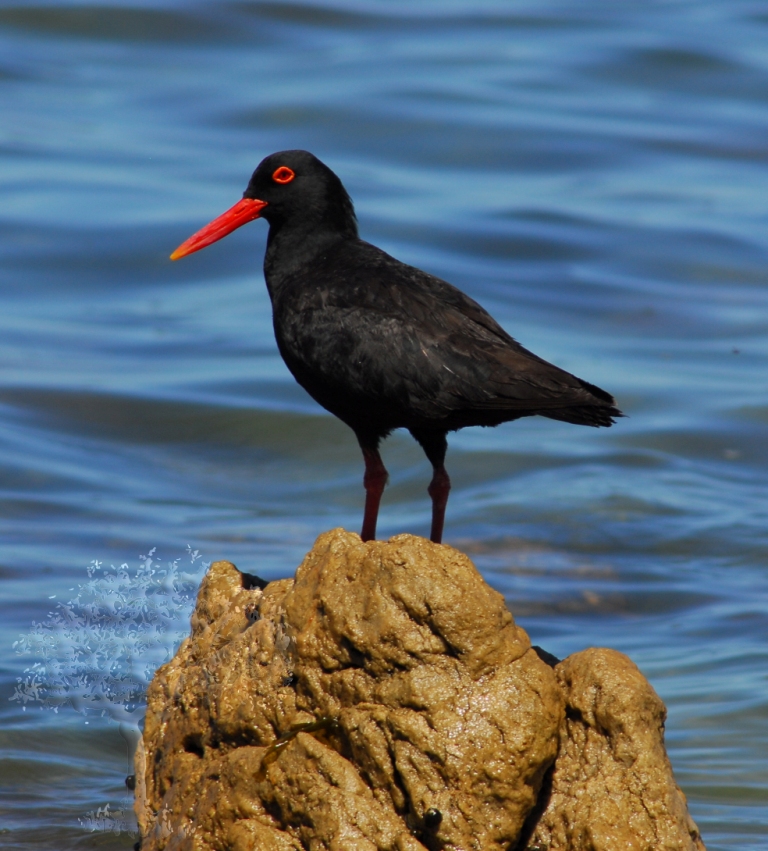
The African Oystercatcher (Haematopus moquini) is a striking shorebird, easily recognized by its glossy black upperparts and stark white underbelly, complemented by a long, bright orange bill that is perfectly adapted for prying open mollusks. This bird is typically found along the southern and southwestern coasts of Africa, favoring rocky shorelines, sandy beaches, and estuaries where it can forage for its primary diet of shellfish. Their piercing red eyes, set against the stark black plumage, enhance their keen vision, essential for spotting prey hidden among the rocks and tidal pools. The African Oystercatcher’s social nature is evident as they often forage in pairs or small groups, communicating through a series of distinctive calls that resonate across the coastal landscape, giving life to the serene yet dynamic environment they inhabit. During the breeding season, African Oystercatchers exhibit fascinating behaviors, including elaborate courtship displays and territorial defense, often engaging in aerial acrobatics to deter potential threats. Nesting typically occurs on open beaches, where they scrape shallow depressions in the sand to lay their eggs. A surprising trait of the African Oystercatcher is its ability to recognize individual human observers, which can influence their behavior and nesting success. This unique adaptation highlights not only their intelligence but also the profound relationship they share with their environment and the challenges they face from human activities, as their survival is intricately linked to the health of coastal ecosystems...
Real sounds, daily wild facts, games and good news from nature. Free on Feravox.